14 December 2009
09 June 2009
25 May 2009
23 March 2009
05 March 2009
02 March 2009
11 October 2008
21 February 2008
24 October 2007
05 July 2007
15 May 2007
13 May 2007
ADMINISTRATION


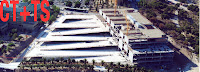
The Administration Unit is a continuous space that can be divided into small offices by means of sliding doors. Its roof is light, and inclined towards the South in order to incorporate the solar and photovoltaics panels. Furthermore, it becomes one of the tails of the pergola that protects the visitors from the entrance to the Centre.
02 May 2007
MODEL BASEPORH

Today the model by Víctor Gaytán (Baseporh) was presented to the patrons of The AlzheimUr Fundation as the first aproximation of how the Centre will be.
As well as to house the vast programme about the Alzheimer illness, the model also shows the value given to the dialogue, which is maintained with the mountain by creating spaces that dignify the life of the patient.
28 April 2007
24 March 2007
PAL HANDLES

We are working with the Portuguese designer Paulo Vale in the development of handles for AlzheimUr. The aim we are looking for, besides the ergonomics and resistance, is the use of colour as a guiding element.
Here there is the first prototype: cylinders of stainless steel 316 and a solid synthetic sphere, the same material as used in the billiard balls.
09 February 2007
08 December 2006
WORKING MODEL

A working model is not the same as a finished model or a model that shows the finished building like a miniture of the real thing. A working model evolves. It influences the idea of the design concept and it is subject to a continuous transformation. Perhaps, a working model and a finished model can be compared to the acts of looking and seeing. The first implies a desire to study and to make a critical comment while the latter seeks to have an image.
In the context of AlzheimUr, the importance of creating a model as a method has proved paramount. It had to be possible to work with a physical material, change it and repeat, subject to new findings during the process of investigation. The first task was to build the mountain in scale. In that way it would be possible to have a sense of the different layers of relationships. To have a feeling for the mountain had from the beginning been an important element for the whole design team. Before starting the design process, the members had met at the roots of the mountain to get familiar with its fragrances, colours, sounds, slopes and paths. (See posts from July 14th). It seemed that the place had its own memories, emerging from the delicate actions that took place in its hills.
The working model is therefore principally about AlzheimUr’s relationship with the mountain, a study of spatial concepts and joints. What is “rational” in relation to a mountain in respect to its topography? One does not have to take for granted that the ethics of the rational is labelled as linear and determinable. Those solutions may be considered “conventient” and “easy” but that definition depends on the one who makes it. The structural element of the landscape is extremely powerful in the search for an equilibrium that the project of AlzheimUr wants to transmit.
In this context, the working model is a way to look at the different paths that curve around the mountain in different layers. Situating oneself on the top of the mountain, the mirador becomes a point of reflection. What is going to take place below in its hills? The modelmaker starts drawing the paths that have already been traced by the team. Observed within this scale, one can see that they lead to others that embrace the mountain continuing along the shoulder and down the arm that give an access to the site. Slowly, the pavilions appear gently making their spaces between the paths. Working physically with the model and evulating critically each step, they find a way to join the structure of the mountain. The centre as a whole that adapts itself to the mountain until becoming the mountain itself, a unique tissue made of nature and programme.
In that process, observation, reflection, and feedback have been terms hovering above the working model, as the memory of the mountain has always been present to verify any decisions.
In the context of AlzheimUr, the importance of creating a model as a method has proved paramount. It had to be possible to work with a physical material, change it and repeat, subject to new findings during the process of investigation. The first task was to build the mountain in scale. In that way it would be possible to have a sense of the different layers of relationships. To have a feeling for the mountain had from the beginning been an important element for the whole design team. Before starting the design process, the members had met at the roots of the mountain to get familiar with its fragrances, colours, sounds, slopes and paths. (See posts from July 14th). It seemed that the place had its own memories, emerging from the delicate actions that took place in its hills.
The working model is therefore principally about AlzheimUr’s relationship with the mountain, a study of spatial concepts and joints. What is “rational” in relation to a mountain in respect to its topography? One does not have to take for granted that the ethics of the rational is labelled as linear and determinable. Those solutions may be considered “conventient” and “easy” but that definition depends on the one who makes it. The structural element of the landscape is extremely powerful in the search for an equilibrium that the project of AlzheimUr wants to transmit.
In this context, the working model is a way to look at the different paths that curve around the mountain in different layers. Situating oneself on the top of the mountain, the mirador becomes a point of reflection. What is going to take place below in its hills? The modelmaker starts drawing the paths that have already been traced by the team. Observed within this scale, one can see that they lead to others that embrace the mountain continuing along the shoulder and down the arm that give an access to the site. Slowly, the pavilions appear gently making their spaces between the paths. Working physically with the model and evulating critically each step, they find a way to join the structure of the mountain. The centre as a whole that adapts itself to the mountain until becoming the mountain itself, a unique tissue made of nature and programme.
In that process, observation, reflection, and feedback have been terms hovering above the working model, as the memory of the mountain has always been present to verify any decisions.
06 December 2006
DEMENTIA UNIT

Due to its role, the centre of dementia is a complex place. It is here where decisions are made, patients are observed and diagnosed and, families are listened to. But, it is as well, a place where different experts meet and exchange and share doubts, ideas and knowledge. The form of dialogue occupies therefore an important part of the day, that is, the TEAM work between families, neurologists, psychologists, neuropsychologists, social workers, geriatrists and nurses.
The typology of this unit shows the specialists’ offices branching out from the central space, which appears as a “street”. It is an internal spine where conversations takes place between professionals. The “street” is a meeting place, where the specialists bring news, construct arguments and provide support to each other. It is a place to read and contemplate, converse and debate. In order to adapt to diverse groups, the meeting tables are arranged along the “street”, different in sizes and intensities, accumulating a variety of experiences as part of the intense investigation that takes place in the whole of AlzheimUr. If once individual work was ever cherished, now group work and research teams are becoming the norm. It even incorporates the international scene as nowadays experts are no longer needed to be physically in the same place. New technologies have changed the way of working.
In the joint search for knowledge, this central space, or street, can be identified as a library, a physical space and an intellectual space where every single story can be found and told through a variety of resources. It is a place that encouraged experiences and where interaction is important in the forms of conversations and debates. The library, which was once a quiet place for individual study, has here become a scenario for dialogues and socialisation. But in contrast to the hectic life of a main street, the library is warm like a living room where hosts and guests engage in conversations and plants form part of the interior by allowing the exterior to enter through the balcony and through the internal courtyards. It is an enriched space which returns the specialists to their more private rooms where they receive patients and their families for more intimate talks in the consulting rooms. These rooms border the mountain so that the patients can walk along a green a balcony that embraces this unit of dementia. A green path that offers a rest and a theme for a conversation looking out towards the orchard while waiting or being close to pine trees that cut across the roof opening the view towards the sky.
The typology of this unit shows the specialists’ offices branching out from the central space, which appears as a “street”. It is an internal spine where conversations takes place between professionals. The “street” is a meeting place, where the specialists bring news, construct arguments and provide support to each other. It is a place to read and contemplate, converse and debate. In order to adapt to diverse groups, the meeting tables are arranged along the “street”, different in sizes and intensities, accumulating a variety of experiences as part of the intense investigation that takes place in the whole of AlzheimUr. If once individual work was ever cherished, now group work and research teams are becoming the norm. It even incorporates the international scene as nowadays experts are no longer needed to be physically in the same place. New technologies have changed the way of working.
In the joint search for knowledge, this central space, or street, can be identified as a library, a physical space and an intellectual space where every single story can be found and told through a variety of resources. It is a place that encouraged experiences and where interaction is important in the forms of conversations and debates. The library, which was once a quiet place for individual study, has here become a scenario for dialogues and socialisation. But in contrast to the hectic life of a main street, the library is warm like a living room where hosts and guests engage in conversations and plants form part of the interior by allowing the exterior to enter through the balcony and through the internal courtyards. It is an enriched space which returns the specialists to their more private rooms where they receive patients and their families for more intimate talks in the consulting rooms. These rooms border the mountain so that the patients can walk along a green a balcony that embraces this unit of dementia. A green path that offers a rest and a theme for a conversation looking out towards the orchard while waiting or being close to pine trees that cut across the roof opening the view towards the sky.
02 December 2006
BANK OF BRAINS

In a recent visit to the Science Museum in Barcelona, it was impressive to see the different kinds of brains within the animal world, presented like jewellery in their glass cases. Everyone agrees that the brain is a complex organ of thought and reason, as well as controlling many functions. The doctor, Carmen Antúnez, has already showed us images of the human brain in two different stages – of a newborn baby and an adult. (See below A TISSUE OF NEURONS I and TISSUE OF NEURONS II, both posted in July 2006). One is about to start its complex relationship with the world but the other has experienced a great deal on his journey through life.
Bearing this in mind, the question arises: under what conditions do scientists work with the brain? That is, what is their attitude of being observed? How is the brain stored, this precious organ that stores our life history? Undoubtedly, for the researchers at AlzheimUr, the brain represents a key to the future. With it, the scientists keep the hope to find more about the signs and evolution that affects the illness. One could think that the brain’s tissue is a language, still fairly unfamiliar. But what then? What method could be applied? Investigating the brain, are we able to be objective? In Jacque Lacan’s essay ‘The direction of the treatment and the principles of its power’ (1958), he questions the result of the analyst on the basis of “Who is speaking?” Although referring to psychoanalysis, his thoughts make us reflect on how questions are phrased. What is expected from the answer? Working with memories and tracing the past of the patient also raises questions about the connection between the brain and emotions. What makes us burst into tears? And, after crying, can we detect signs in the brain as a proof of that specific reaction?
Understanding the complexity of the brain, the typology of AlzheimUr’s Research Centre is designed in such a way as to stimulate communication and to create links between scientists, ideas and memories, with private and common spaces, crossing views and paths. From their respective research units, the scientists can exchange looks and gestures, crossing the green area that divides them, and observe each other at work; by the wet area, doing manual work or working in the dry area (computers). There is always certain awareness of the other, of collaborating.
Entering the Research Centre, the visitor, on the other hand, immediately feels the presence of their treasure, the BRAINS. This materia prima is stored in the Bank of Brains, which is made of a system of mobile shelving units of high density. The Bank is situated in a spacious and an open reception, with an indirect light that enters through the big windows and internal courtyards. With nature’s presence, the visitor is constantly reminded of life’s cycle and the notion of time. Within this atmosphere that expresses respect and security, the patient’s family is invited to participate in the work of the research and to consider the future donation of the brain to be studied.
With the cooperation and commitment of the family, patients, doctors and scientists, the Research Centre becomes a complex system of connections and with time, dense like the tissue of relationships that composes the nervous system of a mature adult.
Bearing this in mind, the question arises: under what conditions do scientists work with the brain? That is, what is their attitude of being observed? How is the brain stored, this precious organ that stores our life history? Undoubtedly, for the researchers at AlzheimUr, the brain represents a key to the future. With it, the scientists keep the hope to find more about the signs and evolution that affects the illness. One could think that the brain’s tissue is a language, still fairly unfamiliar. But what then? What method could be applied? Investigating the brain, are we able to be objective? In Jacque Lacan’s essay ‘The direction of the treatment and the principles of its power’ (1958), he questions the result of the analyst on the basis of “Who is speaking?” Although referring to psychoanalysis, his thoughts make us reflect on how questions are phrased. What is expected from the answer? Working with memories and tracing the past of the patient also raises questions about the connection between the brain and emotions. What makes us burst into tears? And, after crying, can we detect signs in the brain as a proof of that specific reaction?
Understanding the complexity of the brain, the typology of AlzheimUr’s Research Centre is designed in such a way as to stimulate communication and to create links between scientists, ideas and memories, with private and common spaces, crossing views and paths. From their respective research units, the scientists can exchange looks and gestures, crossing the green area that divides them, and observe each other at work; by the wet area, doing manual work or working in the dry area (computers). There is always certain awareness of the other, of collaborating.
Entering the Research Centre, the visitor, on the other hand, immediately feels the presence of their treasure, the BRAINS. This materia prima is stored in the Bank of Brains, which is made of a system of mobile shelving units of high density. The Bank is situated in a spacious and an open reception, with an indirect light that enters through the big windows and internal courtyards. With nature’s presence, the visitor is constantly reminded of life’s cycle and the notion of time. Within this atmosphere that expresses respect and security, the patient’s family is invited to participate in the work of the research and to consider the future donation of the brain to be studied.
With the cooperation and commitment of the family, patients, doctors and scientists, the Research Centre becomes a complex system of connections and with time, dense like the tissue of relationships that composes the nervous system of a mature adult.
24 November 2006
THE TOWN SQUARE

As AlzheimUr is gaining body one starts to realise how rich in complexities and possibilities the centre is evolving. Apart from its function of being a day-care and a centre of investigation that even includes a bank of brains, its research also situates itself in the art of the theatre. But how is that possible? Can a theatre performance really form part of the treatment, or help in understanding the Alzheimer illness?
The theatre has had an important role in society right from the days of the Greeks when it formed part of people’s lives, both general public and the politicians and not merely as a form of entertainment. In Greek theatre an Athenian dramatist was expected to be the teacher of the citizens, to have a message. It was equally his duty to entertain the masses and to provide men of his own mental level with food for thought. Political, religious and social issues were raised and discussed, things that concerned the citizens. In the context of AlzheimUr, it would therefore be interesting to see how play writers can entwine social and cultural issues into the narrative and thus give the patient an opportunity to make associations and recognise moments from his own memory. Committed to the manifold problems of the Alzheimer illness, theatre performances can surely support scientific research in looking for means to help the patient in confronting the changes in his life, and to guide families and doctors in solving moral problems. This would, however, be a great challenge recalling arguments from art therapies suggesting that when memory starts to fail, the Alzheimer patient can react easier to a painting that describes particular scenery as opposed to a film due to the time span that occurs in the narrative from the beginning to the end.
The situation of the theatre within the complex of AlzheimUr in the hills of Montecantalar is also important. Walking in the mountain recalls a number of characteristics from the city; of finding things, of sharing things. The warm climate of the Mediterranean encourages people to make social life in the squares; they organise y bump into lectures, informal talks, cinema, music and dance, exhibitions and workshops... Found along one of the pathways that embrace the mountain, the theatre is like the town square, a place one can pass through and go to. It is a complex place; culture is fostered, communication encouraged, knowledge and technology is set on display. The town square is a heterogeneous place and open, it welcomes changes and is, in that sense, optimistic. It is full of possibilities.
Going to the theatre and summer cinema is a social act that is called back in AlzheimUr, drawn from far back in memory. It is food for thought, as much as those baguettes with jamón and tortilla during the summer nights, when the patients went to watch a film which was interrupted by the sound of crickets and where the flowers of the bougainvilleas covered the walls of the open air cinema. They are memories that cannot be forgotten.
The theatre has had an important role in society right from the days of the Greeks when it formed part of people’s lives, both general public and the politicians and not merely as a form of entertainment. In Greek theatre an Athenian dramatist was expected to be the teacher of the citizens, to have a message. It was equally his duty to entertain the masses and to provide men of his own mental level with food for thought. Political, religious and social issues were raised and discussed, things that concerned the citizens. In the context of AlzheimUr, it would therefore be interesting to see how play writers can entwine social and cultural issues into the narrative and thus give the patient an opportunity to make associations and recognise moments from his own memory. Committed to the manifold problems of the Alzheimer illness, theatre performances can surely support scientific research in looking for means to help the patient in confronting the changes in his life, and to guide families and doctors in solving moral problems. This would, however, be a great challenge recalling arguments from art therapies suggesting that when memory starts to fail, the Alzheimer patient can react easier to a painting that describes particular scenery as opposed to a film due to the time span that occurs in the narrative from the beginning to the end.
The situation of the theatre within the complex of AlzheimUr in the hills of Montecantalar is also important. Walking in the mountain recalls a number of characteristics from the city; of finding things, of sharing things. The warm climate of the Mediterranean encourages people to make social life in the squares; they organise y bump into lectures, informal talks, cinema, music and dance, exhibitions and workshops... Found along one of the pathways that embrace the mountain, the theatre is like the town square, a place one can pass through and go to. It is a complex place; culture is fostered, communication encouraged, knowledge and technology is set on display. The town square is a heterogeneous place and open, it welcomes changes and is, in that sense, optimistic. It is full of possibilities.
Going to the theatre and summer cinema is a social act that is called back in AlzheimUr, drawn from far back in memory. It is food for thought, as much as those baguettes with jamón and tortilla during the summer nights, when the patients went to watch a film which was interrupted by the sound of crickets and where the flowers of the bougainvilleas covered the walls of the open air cinema. They are memories that cannot be forgotten.
06 November 2006
IN WHAT WAY COULD "REMEMBRANCE OF THINGS PAST" BE IMPORTANT FOR AlzheimUr?

In Proust’s novel, Remembrance of Things Past, the primary act of experiencing the environment and absorbing those thoughts in one's memory creates a play of recognition. Only by experiencing, one can remember things past; as Proust wrote "reality takes shape in the memory alone."1 Corporeal and incorporeal substances evoke man's memory as man takes notice of his environment.
Remembering the things past in the context of Murcia, not merely folkloric traditions or even the blue of the Mediterranean Sea come to mind. Experiences associated to the way the fragrance of the orange blossom fills the air, the orange sunlight embracing the mountains in the afternoons, the hot breeze stroking one’s cheeks in the midnight summers, the peculiar grey colour and texture of the olive tree, the different typologies of patios offering shades as the day goes by or even the people taking their chairs to the street in order to converse with their neighbours reach as deep into the memory.
They are impressions of a sensitive relationship between the subject and the object. In terms of the design of AlzheimUr CENTRE, it could therefore be argued that creativity is influenced by the dialectical relationship between two opposite aspects of memory. That is, what creates the new is the relationship between conscious and subconscious 'nutrition' already consumed by experience. In the new lays the ghost of ancestral memories, of preservation and reflection. An elaboration of already existing things continues to exist within us and establishes a tradition.
1. Proust M. (1982) Remembrance of Things Past, Volume 1, Swann's Way, Within a Bidding Grove. Vintage Books, New York, p. 201.
Remembering the things past in the context of Murcia, not merely folkloric traditions or even the blue of the Mediterranean Sea come to mind. Experiences associated to the way the fragrance of the orange blossom fills the air, the orange sunlight embracing the mountains in the afternoons, the hot breeze stroking one’s cheeks in the midnight summers, the peculiar grey colour and texture of the olive tree, the different typologies of patios offering shades as the day goes by or even the people taking their chairs to the street in order to converse with their neighbours reach as deep into the memory.
They are impressions of a sensitive relationship between the subject and the object. In terms of the design of AlzheimUr CENTRE, it could therefore be argued that creativity is influenced by the dialectical relationship between two opposite aspects of memory. That is, what creates the new is the relationship between conscious and subconscious 'nutrition' already consumed by experience. In the new lays the ghost of ancestral memories, of preservation and reflection. An elaboration of already existing things continues to exist within us and establishes a tradition.
1. Proust M. (1982) Remembrance of Things Past, Volume 1, Swann's Way, Within a Bidding Grove. Vintage Books, New York, p. 201.
04 November 2006
NATURE OF COLOURS

It would be interesting to look at the relationship between perception, colours and culture in the architectonic context of AlzheimUr. What do colours do for people? How do they affect the spirit? In a number of references for colour-energy, red signifies vitality, courage, self confidence; orange implies happiness, confidence, resourcefulness; yellow embodies wisdom, clarity, self-esteem; green illustrates balance, love, self-control; blue expresses knowledge, health, decisiveness while indigo conveys intuition, mysticism, understanding and violet suggests beauty, creativity and inspiration. But can the question be taken a step further? Can Alzheimer patients make intuitive associations with colours; recall memories of past events, places, experiences, just as smells have different associations? Could colours of the building materials add to the list of active elements used in memory workshops? Would it be reasonable to think that a certain composition of colours can help patients to orientate when they start to wander?
The world of colours is highly complex not least because it depends on contextual factors like perception and light. They cannot stand alone by themselves. They respond to each other, create a harmony or disharmony depending on the situation against each other. They are part of nature and cultural sensitivity. Saying that one recalls Wassily Kandinsky’s ideas where he argues in Concerning the Spiritual in Art (first published in 1911) that colour is a power which directly influences the soul. Who hasn’t described colours as warm or cold, sticky or sweet, smooth or rough under certain circumstances?
Kandinsky describes colours in terms of movement and musical rhythm. He even goes so far as to say that he paints music, thus he breaks down the barrier between music and painting and isolates, in that way, pure emotion. The movement in colours was for him a horizontal one, the warm colours approaching the spectator, the cold ones retreating from him. Generally speaking, warmth or cold in a colour means an approach respectively to yellow or to blue. While green, yellow, and blue were potentially active, in grey there was no possibility of movement, because grey consisted of two colours that had no active force. For Kandinsky, yellow was the typically earthly colour. Yet, if steadily gazed at in any geometrical form, it had a disturbing influence and revealed in the colour an insistent aggressive character. This would therefore mean that an intensification of the yellow colour increased the painful shrillness of its note. Blue, on the other hand, was the typical heavenly colour. A well-balanced mixture of blue and yellow produced green. The horizontal movement ceased. The effect on the soul through the eye was therefore motionless and the mind rested. The glow of red is within itself but its deepness towards cool or warmth depends on the colour it combines with - yellow or blue. White embodied the harmony of silence, which, according to Kandinsky, works upon us negatively, like many pauses in music that break temporarily the melody. It is, however, not a dead silence, but one pregnant with possibilities. A totally dead silence, with no possibilities, has the inner harmony of black.
One wonders if the music of the artist palette can play part in the memory game that is exercised by Alzheimer patients, not as a play of showing different colours cards but acutally in the built environment. Building materials embody true colours that can interconnect with spaces created both by the natural environment of the place and that of its architecture. Colours are not reduced to express a state of mind but could, I want to belief, equally recall the memory of picking grapes, reading under an olive trees or strolling in an orange orchard, ... That is, recalling Murcia’s tones of colours as a living culture can nurture the inner self of the patients.
22 October 2006
WHY SHOULD THE REFERENCE FOR AlzheimUr BE A HOME?

We are told that Alzheimer illness causes progressive loss of all mental powers - the power to think, to remember and to reason (www.alzscot.org). But, what about the ability to feel and sense, how can the patient express himself or communicate if he cannot “go from his mind to his fingers anymore”? Could music or the arts help to act as a release for trapped emotions?
If the patient “feels at home” one could assume his security, self-respect and self-image would be reinforced - something similar happens to any guest that comes to one’s house for a visit. Knowing the patients’ life-story forms part of that initiative. By talking about the past and finding what is important, s/he is helped to FIND THE WAY HOME. Thus is would be significant to create an environment emphasising UNDERSTANDING rather than CHANGE.
If thought in its essence, the home is the site where humanity and identity of the individual are fostered. The home is a place where the architectural language and the culture of the individual are juxtaposed in order to intensify the 'human' aspect of the home and to recognise each element within the consciousness and conscientiousness of the individual.
The house is thus not only a shelter but a cultural identity that is to be defined according to the inhabitant. It is the mirror of man's sentiments and a way of life. Limits, or boundaries, are not to be understood as that at which something stops. They are equally that at which something begins. As in the world of art, the house is not a collection of objects without a context.
It is a matter of 'feeling' the environment, its culture and peculiarity that becomes reinterpreted and visualised within the boundaries of the home. The 'home' is from where man originated and his history becomes felt when 'breathing' the house. “To breath” the house of Alzheimer patients could be way to understand their environment, and lead them BACK HOME.
If the patient “feels at home” one could assume his security, self-respect and self-image would be reinforced - something similar happens to any guest that comes to one’s house for a visit. Knowing the patients’ life-story forms part of that initiative. By talking about the past and finding what is important, s/he is helped to FIND THE WAY HOME. Thus is would be significant to create an environment emphasising UNDERSTANDING rather than CHANGE.
If thought in its essence, the home is the site where humanity and identity of the individual are fostered. The home is a place where the architectural language and the culture of the individual are juxtaposed in order to intensify the 'human' aspect of the home and to recognise each element within the consciousness and conscientiousness of the individual.
The house is thus not only a shelter but a cultural identity that is to be defined according to the inhabitant. It is the mirror of man's sentiments and a way of life. Limits, or boundaries, are not to be understood as that at which something stops. They are equally that at which something begins. As in the world of art, the house is not a collection of objects without a context.
It is a matter of 'feeling' the environment, its culture and peculiarity that becomes reinterpreted and visualised within the boundaries of the home. The 'home' is from where man originated and his history becomes felt when 'breathing' the house. “To breath” the house of Alzheimer patients could be way to understand their environment, and lead them BACK HOME.
16 August 2006
AUDITORIUM THEATRE

Navigating the internet, we found information about the group, teatroAtroz. It is a socially committed group and which, at the moment, shows a work about the Alzheimer illness for which it has won a sponsorship from the Alzheimur Foundation. Surprisingly, they are also bloggers. The Weblog explains well the interests of the group.
http://recuperarlaluz.blogspot.com
On the other hand, while preparing to write to them and asking them to participate in the project for AlzheiMur centre, it came to our mind an idea to have the lecture theatre also as a stage. Different groups could perform there, equally for the patients as for the many assemblies that take place in the Centre. These activities would strengthen the powerful educational character that the Foundation has.
THE THIRD ENTRANCE TO THE CENTRE


We have revisited the site in order to find out whether the third entrance to the Centre is feasible. It would give life to the area to the north, providing access of goods to the bar-dining hall and, a direct link with the future area reserved for bedrooms. Accessing the site from the petrol station, continuing along the path and passing the wooden house that we have for a neighbour, we come across an access which keeps the same level as the irrigation ditch which frames the mountain.
ICELANDIC RESIDENCES


In Iceland we met the neurologist Arna Rún, who told us about the common typology of residences in the country designated for Alzheimer patients. It consists of small units where the prime element is to create a home. This scale, so familiar, helps to reach a high degree within the therapy, where the patients feel utile and helpful in domestic activities (lay the table with a tablecloth, wash the dishes, etc.).
Arna invited us to visit one of the residences in Akureyri. It accommodates eight patients where they sleep and live under one roof and in fact, the installations are adapted to a conventional single house.
10 August 2006
JEWELS

Dear Carmen,
Thousand thanks for your bombardment of images. They are helping us very much to explain relationships within AlzheimUr to ourselves.
It is fundamental to go beyond the initial idea of a route between independent pavilions. Now we are trying, from the mountain and the brief, to create a single complex… Here everybody is very excited but also pulling their hair out trying to solve this challenge!
I enclose an image of a working model. It owes much to the wonderful image of the neuron taken from a new-born. At last, the spines have begun to develop and to establish connections.
Best regards, javier
MODELLING THE BRIEF II

We have made three models that already propose a more thorough adaptation of the program to the conditions of the site.
The first model represents the Dementia Unit. It must be pointed out that the rooms in this project are as important as the corridors that lead to them, since connections enclose an important function of interweaving the tissue that in the end will constitute the building.
A second model deals with the orchard and its relationship with the day-care centre. This centre leads to the orchard, to which it relates by means of two paths that reach into the free space between the three lines of lemon trees.
Finally, the preoccupation of the third model is to protect the rocky landscape. From the contour lines appear areas in shade due to the construction of changing cantilever above the land that generates spaces of different heights. The space represented by this model is the one of the superior rocky part of the site, where the cafeteria and the administration will be located.
MODELLING THE BRIEF I


We elaborate the first models in paper according to the brief that is being worked on and the basis that has been established.
These models are no more than a series of folds and in fact the building itself gets twisted in a way to fit into the vegetation and to be placed under the top of the trees. Sometimes the roofs are bent since the trees differ in height.
The first model is about the connection that leads to the building and is divided into two categories according to the speed of circulation; faster for the personnel and slower for the patients and the relatives.
Another model represents the Dementia Unit that is divided into three areas: the waiting room, a breakfast room and medical department.
MEASURING THE BRIEF
On the other hand, Marisol Martinez’s visit to our office, a social worker, enabled us to clarify numerous aspects related to a centre for one hundred patients. Our daycentre is divided into two levels according to the degree of the Alzheimer illness. An effort is made to prevent patients with different degrees of the illness to relate to each other. The stratification of these levels also has a symbolic value: the lower the level is the greater is the degree of the illness. This way, the patients of the first stages will be located higher on the mountain. They relate to the surroundings since the degree of their illness allows them to enjoy outdoor activities. On the other, the patients with more advanced degrees of the illness, whose mobility has been decreased, maintain a contemplative attitude towards the environment with an easy exit to the workshops organised in the orchard on the ground floor.


CHART OF SURFACES
The doctor, Carmen Antúnez, has been in charge of elaborating the chart which defines the surface metres of the centre, according to following chart:
A TISSUE OF NEURONS I

Today we have received the visit of the doctor, Carmen Antúnez. This encounter is revealing, especially when Carmen shows an image, a photograph, of a brain of a new born baby when still no synapses have been developed. We are dealing with an embryo of complex network interrelationships. It is fascinating to think that a structure so rachitic in principle, can with time convert into an incredibly complicated network, which we are accustomed to see. Nevertheless, everything is already arranged from the beginning to commence the connections. Thinking about this photograph, we realised that it represents precisely the aim of the project: to be a skeleton for a complex system of relations, and that the centre will end up being a tissue of relationships like the one of the nervous system.
STRANGELY FAMILIAR
Another important aspect of this project is to represent a home for those who attend it, understanding a home as a nuclear, the essential, and representative of each one of us. This home is created as the building gains life. An image that illustrates this idea in a wonderful way is the photograph below by Pascuala Ortiz, which shows her home taken to the hill by her town that holds so many memories from her youth.
ATMOSPHERES

The centre will have areas to rest where the patients can have a siesta or simply form links. These spaces will have the peculiarity to appear interlaced with the pine wood, with the effect that the wood is not a mere element to look at but is a dynamic participant in the act.


The lecture room is not thought to be conventional. The wall of the stage will not be white but a large window that shows the greatness of the landscape, recovering the idea of a Greek theatre resting on the hill and hence forming part of it. This lecture room will, furthermore, be an independent pavilion in the intermediate area.
ENCOURAGING CONNECTIONS
Working in a group


Open air workshops.

The orchard is formed by a regular grid which crosses are formed by lemon trees. Pulling up one of these crosses, a space appears which can accommodate an activity. In this way, it is possible to take advantage of these intended interruptions and to develop in them open air workshops.
Cafeteria

Patients and relatives will enjoy the cafeteria which will be placed on an elevated level so it can offer a dialogue between the site itself and the view.
Identity


A very important aspect of the project is to work in a team. One is to avoid that each professional centre remains in his small office without establishing relationships with others. Instead, we set out to construct a space of interrelationships between the personnel, a meeting room where they can rest, exchange opinions, work… The personnel will go through this meeting room on their way to their offices so that the feeling for the working partners will be expected, and even more important, natural.
Open air workshops.

The orchard is formed by a regular grid which crosses are formed by lemon trees. Pulling up one of these crosses, a space appears which can accommodate an activity. In this way, it is possible to take advantage of these intended interruptions and to develop in them open air workshops.
Cafeteria

Patients and relatives will enjoy the cafeteria which will be placed on an elevated level so it can offer a dialogue between the site itself and the view.
Identity

The visitors who arrive to the centre by car will enter through the intermediate level. That is, the road that runs along the housing estate that reaches the car park. The visitor will cross part of the pine wood, which makes him realise right from the entrance, the intensity which lies in making the landscape part of the programme for the centre until the two dissolve into one.
PERFORMANCES ON THE LAND

Now we propose a way of formalising this settlement. There are three options, depending on if the building system is based on terraces, platforms or on a mixture of both. The aim is to integrate the building into the grid of vegetation, trying to appear as if it were a fluid, that is, invading the land yet adapting itself to it.
TOPOGRAPHIC CONSTRUCTIONS
Strategies used in order to know how to appropriate the orchard.


A first study of the method of how to make use of it, proposes a grid for the orchard, an area that had already a form of a grid. It would be a grid of 5 x 5 m and the edges will be different when facing the slope or the orchard. In addition, there is also a possibility of locating the structure 20cm above ground level and in that way enabling irrigation for the orchard.
Topography of the void in the pine wood

The aim is to adapt to the land in as natural way as possible. In order to achieve that, we establish relationships between the topography of the land and the created topography of the trees. We draw a grid from the existing vegetation and we calculate the distance between the ground and the top of tree as a way to study the void under it. We establish different planes that enable the building to intertwine the vegetation.
The protocol of settling into the topography

A later study proposes a way of settling into the space keeping a maximum slope of 6%. In principle, we consider that the maximum difference in levels between two connecting points will be 4 metres. In this way, the drawing of the ramp, which will cross the construction, will appear by means of circumferences 60 metres in diameters. From here, one can draw straight lines that can connect different parts of the construction in a comfortable way for the users and with a respect to the land.Furthermore, studies of light have been made as well as of the wind with the purpose of finding the suitable way so as to obtain an optimum ventilation for the construction.
Topography of the void in the pine wood

The aim is to adapt to the land in as natural way as possible. In order to achieve that, we establish relationships between the topography of the land and the created topography of the trees. We draw a grid from the existing vegetation and we calculate the distance between the ground and the top of tree as a way to study the void under it. We establish different planes that enable the building to intertwine the vegetation.
The protocol of settling into the topography

A later study proposes a way of settling into the space keeping a maximum slope of 6%. In principle, we consider that the maximum difference in levels between two connecting points will be 4 metres. In this way, the drawing of the ramp, which will cross the construction, will appear by means of circumferences 60 metres in diameters. From here, one can draw straight lines that can connect different parts of the construction in a comfortable way for the users and with a respect to the land.Furthermore, studies of light have been made as well as of the wind with the purpose of finding the suitable way so as to obtain an optimum ventilation for the construction.
DISSECTION OF THE TOPOGRAPHY
We are going to analyse the topography of the place, with the purpose of developing a map of different uses that can take place on the site. It would be a manual of instructions of how to operate in the landscape without changing its essence.
Change of scale, change of speed
A study of three different scales allows a progressive approach towards the land. It begins with a scale of the region, appraising the relationship of the site with the adjacent towns and cities, to the scale of AlzheimUr, much more detailed that describes the possible planning of traffic inside the site. From the intermediate scale, the scale of the housing estate, emerge new accesses to the site. The quick access from the lowest part of the site through the National road will help making the traffic through the housing estate more fluid. Another third access to the north is also possible. In order to obtain a fluid traffic, these routes help defining the different types of users depending on the different accesses, and reserving some of the accesses to the personnel or the arrival of goods.
The topography determines the degree of intimacy offered by the site. There are different degrees of privacies, from the minimum to the maximum. Such a powerful topography forces any kind of a building to adapt to its form. We can distinguish variations within the slope and we have made a first study of three areas: the first is the road from the housing estate that makes a great visual impact; the second is stone gravel that has been left there from making the mentioned road, instable and more complicated to work with. The third area is flat and fertile and could be used for planting. Furthermore, it is important to bear in mind the possibilities offered by the existing irrigation ditch and the orchard of lemon trees. The irrigation ditch can be understood as a guide to move through the place. In terms of the orchard, it offers us changing images according to the seasons, as well as different visual lines and crossing relationships.
Surprising atmospheres

We are going to climb the mountain in order to explore the different kinds of atmospheres. Immediately, we sense the steep slopes starting to indicate dryness, sandy air, and cracks in the sand. The opening to the pine wood leads to a dense vegetation that makes us reduce the speed of walking and arouses tranquillity and serenity, besides to offer fleeting visions of the outside. The labyrinth of trunks of the pine trees acts as a web of parasols. More ahead, an irrigation ditch appears. Advancing a little more, the atmosphere is dry, something that makes us think about ways of reserving and keeping water. As we reach the peak, the slope increases and at the same time, the uniqueness: we arrived at a sunny place but unprotected. In front of us we are left to emptiness, an artificial void of the land that is rough but also attractive to use in some way.
Stimulating the senses

Going up the mountain suggests a change of aromas, change of sounds and light. They are all sensorial elements that are characteristic for the region: the orange blossom, the Rosemary, cicada, the song of the birds, the green and fresh light … We appreciate these changes very much not least because they correspond to the essence of the site. Their conservation is essential to recover the memory of the site.
RECOVERING THE MEMORY OF THE SITE
THE ENTRANCES


When passing the main entrances, one discovers already marked paths and others that are new, but essential.
THE DIFFERENT KINDS OF ATMOSPHERES


There appear different kinds of atmospheres throughout the route, from an open and luminous atmosphere to a much more intimate one that is filtered by an amazing greenish light.


When passing the main entrances, one discovers already marked paths and others that are new, but essential.
THE DIFFERENT KINDS OF ATMOSPHERES


There appear different kinds of atmospheres throughout the route, from an open and luminous atmosphere to a much more intimate one that is filtered by an amazing greenish light.
ATMOSPHERE OF TRANSITION


The site offers many landscapes: a diversity that includes rocks, wood of pine trees and even an orchard. The movement between these different textures proposes interesting perspectives.


The site offers many landscapes: a diversity that includes rocks, wood of pine trees and even an orchard. The movement between these different textures proposes interesting perspectives.
TOPOGRAPHIES


We find layers of atmospheres in the rough topography. The ascent provides a change of atmosphere, views and scents. At the top of the site there is a rocky area, a vantage point where one can enjoy the view of valley.


We find layers of atmospheres in the rough topography. The ascent provides a change of atmosphere, views and scents. At the top of the site there is a rocky area, a vantage point where one can enjoy the view of valley.
01 August 2006
TO DISCOVER THE SITE
The first day starts with a visit to Montecantalar: the site is discovered. After the visit, the design team goes to Garrucha, the base where it will work during this first phase of the project. The common aim for this day is to grasp the impressions during the exploration of the site.
THE ALZHEIMUR CENTRE
Our weblog emerges from the wish to offer an insight into the process of creating ideas for the AlzheimUr Centre. This centre is the reference for the region of Murcia (Spain) to provide a comprehensive attention to the illness of dementia. This weblog is an added tool to the project. Besides proofing the elaboration of different criteria that guide the development of the work, it tries to encourage interactivity with a system of commentaries. This is done in order to enrich the project with significant suggestions. Interdisciplinary collaboration is believed to be an essential part of the architect’s work.Working sessions every day are based on different programmes to develop specific contents and objectives. At the beginning of the first ten days the approach will be very intuitive. Then it will formulate the brief which, without being completely defined, suggests aims and important interests which the project will be based on.